Owl city is an american electronic project that began in 2007, this project is one of many projects which have been set up by Adam young. This project mainly began getting popularity during 2009 with their six time platinum single "fireflies", the song fireflies was released within an album called "Ocean eyes". One of the songs within this album was debuted within Tim Burton film Alice in wonderland and another in legends of the guardians.
Their most recent album was titled "ultraviolet and the mobile orchestra" instead of releasing all of the songs as an album in one go he would instead release a steady flow of EP's as singles, the most recent one of these was released in june of 2015 and is titled "unbelievable", an animated music video was created for this and the song itself was performed with another artist known as Hanson.
Owl city's music is often described as indietronica or synth-pop and it is said that it belongs under the electronic music genre, Young has stated that he is most inspired by disco and European electronic music when it comes to producing his own. He also incorporates some of his christian faith into his music as he is a vocal christian.
When I was a kid I saved up all my dough so I could buy C-3PO
Put Mentos in my Diet Coke in the backseat of the bus
When I was a kid I ate "Spaghetti Os", played laser tag and GI Joe's
And if you vowed no girls allowed then you could join the club
When I was a kid I spent my Saturday's
Blowin' on Nintendo games
The newest thing was Lion King and I could feel the love
It's unbelievable
This is as good as it gets
It's unbelievable
Don't know what's gonna happen next
It's unbelievable
You haven't seen nothing yet
It's unbelievable, it's unbelievable
[Hanson:]
When I was a kid I dreamed of Power Wheels
Stayed up late watching action films
And I won't lie, my friends and I, were too legit to quit
When I was a kid I lived for climbing trees ate Dr Pepper jellybeans
My favorite part of "Jurassic Park" was how real the Raptors looked
When I was a kid I still had VHS, watched Fresh Prince and Jazzy Jeff
Zack Morris owned the first cell phone, it was off the hook!
It's unbelievable
This is as good as it gets
It's unbelievable
Don't know what's gonna happen next
It's unbelievable
You haven't seen nothing yet
It's unbelievable, it's unbelievable
Cat, pogs, and floam and home alone, Berenstein bears and bean bag chairs
My L.A. Looks and Goosebumps books, oh Etch-a-sketch
What happens next?
Grape juicy juice and Dr. Seuss, piggy-back rides and
Slip-n-slides, McDonald's Fries, those were the best
What happens next?
It's unbelievable
This is as good as it gets
It's unbelievable
Don't know what's gonna happen next
It's unbelievable
You haven't seen nothing yet
It's unbelievable, those were the days oh-oh
It's unbelievable
When I think back I'm amazed
It's unbelievable
Cause baby those were the days
It's unbelievable
It ruled in so many ways
It's unbelievable, it's unbelievable
(And I'm so amazed!)
(Those were the days!)
Unbelievable music video:
Unbelievable live performance:
I had researched a live performance of the song as well as the official music video in order to get a better idea of the style of the band members and the type of clothing they wear as well as the type of people that they are so that we can kind of mimic their style.
Theses are the two pictures of us doing our final part of filming for the music video, the first one is of Sam when we were around my house filming the lion king scene and the pillow fort scene, the picture itself is when we were filming the Nerf shootout scene however and was Sam when we told him to pose for one of the parts.
The second picture is after we got changed and decided to go to Valence park which was closer to my house as it was a nice day and we had decided to take advantage of this nice day and and film a little bit more outside which is when we filmed the rope bridge scene as well as the Swan and the swing set scenes.
I had to contact the artist on my phone during the lesson as the school settings would not allow me to, so instead here is a screen shot from my phone of me contacting the artist and asking permission to use their song for the music video.
Before we had even chosen "Unbelievable"as our music video we wanted to do, me and Destiny had looked through many different songs and music videos on youtube before we had even settled, we had originally started un Youtube with searching up terms such as "original songs" and "non-copyright" music however we had decided that none of that was really helping us so instead we began to search up specific songs and then go through the recommended videos which were somewhat related to the song and eventually led to us finding "Unbelievable".
When we began to start searching up specific songs we began with the Plain White T's as we know another group which had decided to actually use on of their songs so we decided that we would begin to look at the rest of their songs and see if there was anything else that we could use, this is one of the songs which caught our eye however we still decided to look in the recommendations for this one and keep searching to see if there was anything else.
Music videos can have many different purpose's from advertisement to sending out a message to the world all the way to portraying the artists feelings or solely being produced as a way of generating more revenue from different sources however nearly all music videos have one purpose and it is to make money even if it is just enough to cover the costs of what it took to produce the music video alone and to help with promoting the artist.
The music videos which are generated to produce more income are normally put onto sites such as yotube as the video can then be monetized which basically means that the more views, likes and favorites that the video gets then the more money that the up loader gets for uploading it to you tube, basically you tube works in the way that if a video is monetized then the uploader gets paid by youtube for the amount of amount of views that video receives so more is clearly better. Artists can also use this to their advantage as other channels which wish to use this music have to contact the original source of the song to gain permission to use this music but normally with bigger companies this will normally lead to the individual wishing to use that song having to pay in order to do so, if an individual fails to do this then the artists can take the video down or can instead copyright claim the video so that any money generated on it goes to them instead as it contains their content, so either way if somebody else wants to use their song then the original creator is generating even more money. An example of this being done is with Drake's Hotline Bling.
Some music videos however may be made by the artist in order to better or even change their brand and how they are perceived by the public, an example of an artist which has done this recently is Miley Cyrus who used to be part of Disney and used to be seen as a kind of innocent and kind person however her music video called "wrecking ball" completely changed her image and even shocked the world as they saw what she really wanted to be portrayed like and how she really wanted to be seen by the world.
In the media industry there are three main aspects when you are talking about the model of the media that are mainly involved with the production of music videos and films, these three main aspects are the audience, the text and institutions. When all of these aspects come together within the media it can really help them to achieve their goals and further their business.
Audience:
It is arguable that when it comes to the media that the audience is the most important part as without an audience there would be no real need for the media in the first place, the audience mainly help with the financial aspect of the media as the audience will be the ones to consume whatever the industry put out and it is also worth noting that without an audience not only would the media industry not generate any money but they would also not know what to produce in the first place as the industry normally produce what the audience want to see in order to better appeal to them, the media need an audience to generate money and to know what to produce and when to produce it.
Institution:
Institutions are the big companies which are behind the making of the media content and the institutions main roles are to market, exhibit, produce and distribute this media product which has been produced. When it comes to the marketing aspect there are many ways which it can be done by the institutions such as online and over social media like twitter or you tube but it can also be done in the more traditional sense with things such as posters or trailers which are shown on television, the distribution is normally done differently depending on what type of media is being produced, if it is a television series which is being produced then the finished product is normally distributed through companies such as ITV, BBC or SKY where they buy the product and broadcast it on their network however if it is a film then it is normally sold to cinemas such as Vue or Cinemaworld. However these institutions are not credited for their work as much as they should be and do not generate as much income as they possibly should have due to things such as pirating and downloading the shows or films illegally online for free.
Texts:
Texts come in many different forms but it is easiest to say that the text is the finished product from the institutions and what is put out to the public, texts can be things such as music videos, films, television series, blogs or magazines and this is what is consumed by the audience where they then give their feedback to the institutions and tell them if they want more or something different thus continuing the cycle.
Alex Southam also freelances for OB Management, he trained as a lawyer but decided to go in a new direction and work in film instead, he began with just making music videos in order to learn "the trade". He has worked for Agile films before and they put up the following description of him onto their website: "Alex Southam is an exciting new talent, working in a dizzying variety of styles across live action and animation. Entirely self taught, his inventiveness and creativity have caught the eye with a series of diverse promos for the likes of the walkmen, Alt + J and Lianne La Havas, Alex joined Agile in august 2012."
When Southam first began on his music videos he undertook all of the tasks involved with the production such as Camerawork, Lighting, Editing but now uses a director of photography, Southam likes music videos and their format as you can " try new techniques and have realistic freedom", he is however lees keen on commercials as they allow for much less freedom. Alex Southam uses Vimeo to showcase his videos, this is becoming an increasingly popular platform and is seen as having "higher status" than youtube.
His main breakthrough came with the music video "Tesselate" for Alt J, it had a budget of £10,000 and only had a shooting time of 1 day and it had a pretty large cast, this music video was kept pretty simple except for the special effects which were used and all of them were created in Adobe After-effects. One of his other more notable music videos which he produced was for the song "lost and found" by Chase & Status, which had a budget of £50,000 and was filmed in Los Angeles, for this music video he mainly used steadicam, it was filmed at 36 frames per second and then slowed down and was mainly influenced by Massive Attacks Unfinished Sympathy, during this music video they mainly went for an early 1990's VHS Video look.
Emil Nava began as a runner for film production companies, he worked in the beginning for blink productions and now freelances for OB management. After working as a runner Emil Nava graduated to assistant director and afterwards he signed onto academy who are the biggest music video production company, he the went on to work for between the eyes and now mainly works for pulse.
He has now begun to produce advertisements for different companies, these advertisements have a far higher budget than a music video and higher production value but allow for much less creative freedom.
At his busiest work period Emil has made 24 music videos in one year, when he began shooting videos for independent labels the budget for the video would be very low and only somewhere between £5,000 and £10,000 as a contrast his most expensive to date was for Jessie J and the budget was £160,000. Emil's very first budget was for the ban
d Kid British and was for the track Our house, the budget for this was only £20,000 and the locations was in manchester also the cast was only the local people that lived nearby to the filming location, there was only one day for filming and 2/3 days for editing and only 10 days for the pre- production, this task demonstrates the very tight timescales involved with producing music videos.
OB Management:
This company works as agents for music video directors and their main aims are to: nurture talent, work with production companies, work with record labels and match the right director to the right artists. Some of the production companies that OB work with are: Pulse films, Rocket, Agile films, Friends and Wonda.
Emil's Top Tips:
Use extreme close ups on faces whenever possible and do not shoot any music video fully in medium shots/ long shots.
Jamie Thraves started off his career by making short films during university, he used an award winning short film which he had made in order to get a "foot in the door" with the video production company Factory Films, he began by shooting three very low budget music videos which in total only cost about £5,000 each. Jamie Thraves has also described how the process of music video production goes through and according to him these are the steps: A commissioner first of all sends out a record track to anywhere between 5 and 10 directors and the directors then go on to submit a treatment, the stage of this is actually unpaid, the director that had submitted the "best" treatment is then commissioned to make the video its only then that the director is actually paid and the video is actually produced.
Jamie Thraves submitted for two of his best known videos and actually got accepted into both of them, these were Radio head - Just with just a budget of £100,000 and was only shot in three days, the other one was Cold play - The scientist which had a £200,000 budget and was also only shot in three days.
Radio-head - Just:
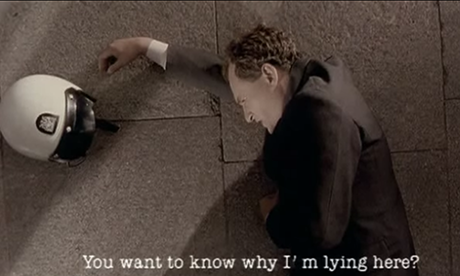
This is an example of one of Jamie Thraves very first music videos that he was ever commissioned to do and it has also turned out to be one of his best and most memorable videos to date.
Jamie Thraves has definitely advanced through the creation of music videos over the years however and has been getting bigger and bigger and his music videos have been getting more and more budget for his music videos for him to work on them. With one of his most recent music videos "song for Lisa" he had a budget of £20,000 but still only had a shooting period of 2 days, he has shot three features so far being "the low down", "the cry of the owl" and "treacle". Jamie also gave a couple oftips for anybody looking to produce music videos in the future these being, use the lyrics while trying to not be too literal and most importantly go with the emotion of the lyrics.
In this blog i will be discussing sexism in different music videos and how they are portrayed to the public, we will also mainly be looking at Laura Mulveys theory of the male gaze for this as well as that theory goes into a lot of detail about the sexism in pop videos. Laura Mulveys theory states that the camera in any film or music video is shown through the eyes of a male and objectifies women, she says that the male gaze represents women as objects to be admired for their appearance rather than for who they actually are and their personality and it also states that because of this male gaze women are also oppressed when watching these videos as they can only look through a males eyes and not through their own. The theory also states that the women do not move the plot of the movie forward and it is only the male which does, the woman is only there to be with the man and to make him feel more important.
If we are to take this theory of the male gaze and apply it to modern day music videos we can still see that it upholds to this day, if we are to look at a more modern music video such as Nicki Minaj's Anaconda we can see that the male gaze still exists in some cases and women are still sometimes viewed as objects of male desire, we can see throughout the entire music video that instead of talking about self confidence and personality the lyrics instead talk about the female body and also about how much it appeals to the males and also talks about how all of the men want her just because of how she looks compared to the rest of the women. You can also tell that this music video mainly focuses on the male gaze as all of the shots and cinematography seem to mainly focus on the body of Minaj and her butt instead of her face or the rest of the environment.
However there are also music videos which actively go against the male gaze and don't attempt to hide it or anything instead they make the music video and song pretty much for the purpose of going against the male gaze and supporting Laura Mulveys theory. An example of one of these songs is Lily Allen's "hard out here" although some of the cinematography and some of the shots present show off the male gaze and it seems like they support it if you are to listen to or read the lyrics then you will see that it is pretty much all done ironically and they talk about how society is hard on women especially in the media and it also touches on the subject of the glass ceiling and how women kind of have it hard in the working world. This music video was clearly made to spread a message and to help support women around the world.
Early on in Michael Jackson's career he was not a solo artist, he was actually part of a group with his brothers called the Jackson five and they all used to perform in a band and sing together although the person which was mainly at the forefront of this was actually Michael, he was the main person that was signing throughout the band and the other brothers were mainly in the back as backup signers or instrument players. One of the most songs which Michael did while part of the Jackson 5 was Rockin' Robin, this music video only had limited sophistication and had pretty bad lip syncing.
The main song in which Michael appeared and sung on his own was in a music video for "rock with you", the main interests of this music video was him signing but was also his costume and is the first time in which Michael's iconic costume choice was made apparent and is the first time in which he demonstrated to the world that he picks quite different and abstract costumes to perform in. The second music video which he performed in was titled "Billy Jean" and was Michael's first main music video in which he doesn't just sing but the combination of the music video and the song tell a story and is about more than just lip syncing, this idea of a story based music video also carries over to "Beat it" along with a elaborate choreographed sequence at the end.
Michaels biggest and most well known music video however is probably "Thriller" and is known as one of the biggest and most popular music videos of all time, there were a lot of different aspects which went into creating the music video and a lot of features which made it stand out such as elaborate choreography, costumes and dialogue the idea of a long term music video where a mini movie was made for a song and then edited down for a shorter version where it was just the song sequence and not the entire thing, the entire thing runs a whole 14 minutes whereas the shorter version which was the main one to be shown on MTV ran just a little under 5 minutes. The entire video cost about $500,000 to make altogether Jackson's record company had not intention of paying for it as they had already financed for two of its songs, according to John Landis Michael's really wanted this to follow through so even offered to pay for it himself however in the end they made a deal with Showtime and MTV to cover the costs, At the first MTV music video awards in 1984 Thriller had won rewards for the best performance video, best choreography and viewers choice. With the famous graveyard dance scene Michael started the trend of group dance scenes within pop videos, the thriller music video however does owe a debt to Alice Copper who in 1975 created a movie based on his stage show of the "welcome to my nightmare" tour. Most homes had video cassette recorders in 1983 and sales of these videos were big business, it was possible to buy a VHS of Michael Jackson's thriller which also included a making of segment and a behind the scenes documentary, this tape was later certified by Guinness world records as the best selling music video of all time as it sold 9 million units. After the events of Thriller Michael was the biggest pop star in thew world all of the videos which he made from then on also made the news, his next one he made was for the song "bad" and was a major event being shown for the first time on BBC, people wanted to see his new image and the dancing which was choreographed, In this video Michael's appearance has not changed that much as he still wears a jacket and the same kind of shoes however the video seems a lot more aggressive and adult as compared to the fun nature of thriller. One of his final music videos which he produced was for the song "black and white" and was very expensive as well as inventive and was used by Michael as a way of trying to resurrect his career after receiving many accusations of being strange and the problems of his image and him now having white skin and this video portrayed a serious message as compared to his others and it was about skin tone and that it does not matter which kind you have. As time went on Jackson's music videos became much more complex and much longer with the video becoming as important as the song itself, Jackson mainly used his pop videos to reinvent his image, tell a story and to address serious issues. This image on the left portrays what king of message that Michael was trying to give through his Black or white music video with the costume that he wore and the kinds of props which he used.
Katy Perry is an american singer whose target audience is generally girls between the ages of 14 and 18 and in her music videos she generally relays messages and reflects anxieties which her target audience may have in order to better appeal to them, she can appeal to the girls in a kind of older sister image and she doesn't usually appear overly sexualized whereas other female singers may attempt this to better appeal to the male audience.
Katy Perry first rose to fame in 2008 with her release of the single "i kissed a girl" which sparked many controversies with its homosexual themes but the main thing which began to build her fan base was her second song "hot n cold" which contained many different lyrics and themes about men which women can relate to, the song and video is about a wedding gone wrong but instead of being stereotypical and the woman being the one to run away and cry it is instead the man that does so and it is the woman (Katy Perry) which shows the dominance in the relationship which helps to spread a re-enforcing message to girls that they are just as strong and important as the male in the relationship.
Perry's next notable song which helped to build her fan-base was "fireworks" where behind the song and the music video there was message that was embedded which was about being yourself and encouraging people not to shy away from who they really are, this is all displayed in the music video where towards the end of it fireworks come out of all of the different people present as they had learned to embrace themselves, this song also helped to expand her audience as the message was not just relate-able to her target audience but also to other people outside of her target audience.
Katy Perry also has another song and music video called "wide awake" which she made after her two year marriage with Russel Brand and they had broken up, The video contains a scene from another video which she had made during the marriage which showed how happy she was and that she was on "cloud nine" and somewhat shows girls that being in love with somebody this much is a great thing. However her video wide awake mainly tells a story through the video and lyrics of how she had broken up with Russell Brand and shows Katy as being much more aware of both herself and other and also shows that being madly in love sometimes isn't the best thing in the world as she had previously stated, this video almost shows her "transformation" into her new self and she doesn't
have to pretend to be someone else for anybody anymore.
Audience theory is the theory that audiences receive and respond to texts very differently. The different effects in the text can generate different responses throughout different people, it is a way to characterise and group together different audience interpretations.
A significant section of this theory is the "Encoding decoding theory" which was developed by Stuart Hall in 1973, this theory is how producers encode meaning/ ideology into text which audiences then go on to decode, the texts that are encoded can include movies, books, magazines, music videos and video games. The audience then decode these meanings and take the meanings out of the text regardless of what type of text it may be, texts can be decoded by body language in order to understand emotions/ relationships, these texts however have multiple different meanings and can be decoded in various ways however these messages can mean different things to different reasons. There are three main ways of decoding these texts however and these are the following: preferred reading, negotiated reading and oppositional reading, Preferred reading is when audiences agree with what the producers are encoding and the texts that the creators are attempting to get to the audience, then there is negotiated reading where audiences only partially agree with what the producers are encoding and their texts but they also come up with some of their own text and meanings, finally there is oppositional reading where audiences reject/ disagree the producers messages and decode the texts completely differently to what the creators intended.
When it comes to encoding/ decoding music videos managers encode artists such as the spice girls and the pussycat dolls with specific ideology which is ultimately to increase financial gains, the target audience of these music videos will always have a preferred reading where they accept all messages and decode all of the text in the way that it was intended to whereas the secondary audience will usually decode in a negotiated reading and finally audiences which hate the music genre such as parents will normally decode in a oppositional reading.
During this lesson we were tasked with taking different parts of a music video and a music track and editing the video segments to the beat on the track, the reason we had done this was so that we could learn how to edit to a beat once it came to our own music videos so that we could edit those properly to the beat as well.
During the lesson we were taught numerous different skills which we could use for our own music videos once it came to editing them, we were taught how to edit to the beat, we were also taught how to put two different shots into one frame and how to change the speed on separate shots as well as how to reverse separate shots as well. One of the other reasons as to why we did this exercise was to simply just have a refresher on how to edit so that we would be up to par when it cam to our actual videos.
I believe that i done well on the timings with the beats however i believe that i could do a lot better with the different types of shots and choose better shots appropriate to the music and the different parts within the track.
Richard Dyers star theory is the idea that certain icons and celebrities are manufactured by institutions for financial gains, he claims that celebrities are constructed to represent "real people" that experience real emotions. He claims that the stars are manufactured for one purpose which is to make money out of the audience through them responding to the stars "personality" and doing things such as purchasing the artists music and becoming their fans. The three sections which his theory are split into are constructions, audience and institutions and culture (Hegemony).
Constructions:
Richard Dyer believes that artists are constructed through artificial images such as advertisements, films, magazines and music videos and that institutions basically pick a type of personality for that celebrity to have and these personalities are manufactured solely for financial gain. These celebrities are constructed as "real people" which experience real emotion which is also these celebrities unique selling point (USP), an example of this is Britney Spears where she was basically constructed to raise female identity within pop music and was initially constructed as a role model for the teen girl market, this USP was well done as Britney's identity was originally placed within a male - dominated society where there were limited stereotypes of femininity and not many female singers or bands to begin with.
Industry and audiences:
Dyer believes that stars are manufactured in order to make money for their record labels by appealing to target audiences, Record labels have to market a number of different artists in order to cater for different target audiences and their preferences so for example a record label may have multiple different artists such as a boy band to cater to the target audience of younger girls and may also have a dominant and scantily clad female singer in order to appeal to males from teenagers to adults. So for example again with Britney Spears she was portrayed as innocent and very girly with pigtails and pink etc. which enabled her to be able to better relate to the teenage girl target audience.
Culture (hegemony):
This is the idea that the audience relates to the star as they have something in common with each other which can be anything from the personality or the clothing style all the way to liking the same things such as things or themes which the star talks or sings about, A good example of this is with the Beatles where people not only attempted to replicate their clothing style but also copied their hairstyles where they were such a big an popular band.